
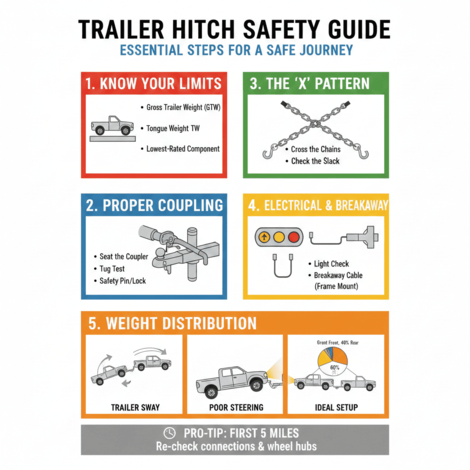

When it comes to towing the items, trailer hitch safety is the most important factor to secure your vehicles.Improper coupling and without safety equipments it can make the safety problems and lead sever damage or accidents. If you are looking to towing a light weight utility trailer or any heavy type of loads you should focus on the security that save your time and things. For trailer safety you should use the proper use of safety chains that make the connection between trailer and tow vehicles. When you properly installed and use of safety chains you can safe from sever damage and sudden accidents.
In this guide we will explore you all about the safety chains for trailer requirements , and some best practices that you can use to ensure the security and safety of trailer while road driving.
Why Trailer Hitch Safety Matters?
A trailer is one of the safe connection that help you to hold the vehicle. If you use high quality hitch you can save from sudden braking , sharp turns and uneven road can cause the fail of coupler. Safety chains work as a backup connection that play and important role in trailer safety. The backup connection help you to attached to vehicle tow with main hitch disconnects.
What Are Safety Chains for Trailers?
Safety chains plan an important role to connect your trailer frame to tow vehicle. Without proper chains installation you can loose trailer:
- Swing uncontrollably
- Cross into other lanes
- Cause severe accidents
- Damage to both vehicles
That’s why trailer hitch safety laws in most regions require them.
Safety Chain for Trailers Requirements
Here are some safety chain for trailers requirements that help you to save trailers:
1. Chains Must Be Strong Enough
Safety chains mostly used to cover the full weight of the trailer and its load. If the chains are weak , thin and rusted it can cause the sudden accident and stops of sharp turns. You have to check the chain condition before towing. Strong chains are very important for trailer hitch safety.
2. Proper Attachment Points
Chains should be attached to trailer frame and tow vehicle hitch or frame. Adding the strong chains that help hitch ball. Proper attachment is very crucial for trailer safety.
3. Cross the Chains Under the Trailer
Chains must be crossed under the trailer tongue in an “X” shape. This creates a cradle that helps support the tongue if the hitch disconnects. Crossing the chains also improves control and reduces road impact. It is a key safety chain for trailers requirement.
4. Correct Chain Length
Chains should allow smooth turning while staying off the ground. Chains that are too long may drag and cause sparks or damage. Chains that are too short can restrict movement and stress the hitch. Proper length helps keep the trailer safe and stable.
5. Secure with Safety Hooks or Latches
You should always use the hooks for more safety latches and locking the clips. In this way hooks cannot b loose easily and improve the trailer hitch safety and make easy towing.
Common Safety Chain Mistakes to Avoid
Here are some most common mistake that you shoukd avoid to sudden accidents:
- Using chains that are too thin
- Not crossing the chains
- Letting chains drag on the ground
- Attaching chains to the wrong points
- Using damaged or rusty chains
Avoiding these mistakes helps keep your trailer safe and ensures better trailer hitch safety overall.
Related Blog: Complete Guide to Car Towing Rules and Regulations in Australia
Do All Trailers Need Safety Chains?
Yes in many cases you should need if you are towing:
- Utility trailers
- Boat trailers
- Car haulers
- Small cargo trailers
Safety chains are usually legally required. Even if not mandatory in some areas, they are still highly recommended for maximum trailer safety.
How Safety Chains Improve Trailer Safety
In the proper way install the safet chains can help to avoid the sever damage :
- Prevent total trailer separation
- Improve vehicle control during emergencies
- Reduce accident risks
- Protect other road users
- Help you stay compliant with towing laws
Simply put, they are essential for keeping your trailer safe in real-world driving conditions.
Related Blog: Trailer Average Weight: How Much Does a Trailer Weigh?
Final Thoughts
Understanding and following safety chain for trailers requirements is a key part of responsible towing. No matter how short the trip or how light the load, safety chains provide critical backup protection.
By focusing on trailer hitch safety, inspecting your chains regularly, and installing them correctly, you can tow with confidence and ensure your trailer stays secure every mile of the journey.
0 Comment