


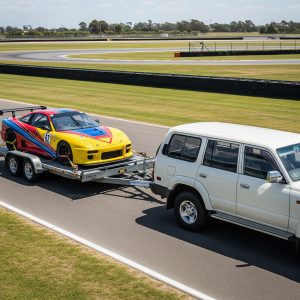
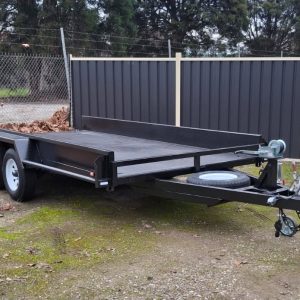
Transporting a vehicle on a trailer can seem daunting, but when done correctly, it’s a safe and secure process. The key is to understand the correct procedures and use the right equipment. At TrailerLink, we provide purpose-built car carrier trailers designed for this exact task, and here, we’ll walk you through the essential steps to ensure you’re moving your vehicle as safely as possible.
Before you even start loading, the first step is to check your towing vehicle’s capacity. Your car or truck must be rated to tow the combined weight of the trailer and the vehicle you’re transporting. You can find this information in your vehicle’s owner’s manual. Exceeding this limit is not only dangerous but also illegal. Next, inspect the trailer itself. Make sure the tires are properly inflated, the lights are working, and the coupling is in good condition.
Loading the vehicle onto the trailer is the most critical part of the process. Always use the provided ramps and ensure they are securely attached to the trailer. Drive the car on slowly and carefully, aligning it in the center of the trailer. Once the car is on the trailer, it’s crucial to position it correctly. The goal is to achieve a good “tongue weight”—the downward force the trailer exerts on the tow ball of your vehicle. The ideal tongue weight is typically 10-15% of the total trailer and load weight. Positioning the car too far forward will put too much weight on your tow vehicle, affecting steering and braking. Too far back, and the trailer will become unstable and prone to dangerous swaying. On a purpose-built car carrier, there are often markings or guides to help you position the vehicle correctly.
Once the car is in position, the final and most important step is securing it. Use heavy-duty tie-down straps specifically designed for vehicle transport. Never use rope or flimsy straps. Secure the car using the designated tie-down points on the trailer and the car’s frame or wheels. Avoid attaching straps to suspension components, as this can cause damage. We recommend using a minimum of four tie-down points, one for each corner of the vehicle. After the straps are tightened, do a final check. Pull on each strap to ensure it’s tight and re-check them after the first few kilometers of your drive.
Following these steps ensures that you’re moving your car safely and legally. At TrailerLink, our online booking and self-serve model make it easy to get the right equipment for the job. By choosing a purpose-built car carrier and following these safety guidelines, you can have confidence that your vehicle will arrive at its destination without a hitch.

0 Comment